Overtime Management Guide: How to Reduce Overtime Costs Without Cutting Staff
Overtime isn't always a problem. Sometimes you need all hands on deck for a busy weekend or a seasonal rush. But when overtime becomes a weekly habit, it quietly eats into your margins and signals deeper scheduling issues.
Here's how to understand overtime rules, spot the patterns that drive unnecessary overtime, and take control of your labor costs.
Know the basics: FLSA overtime rules
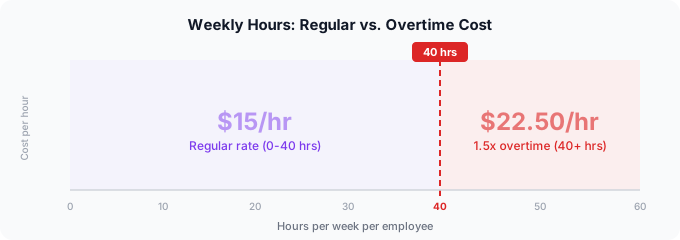
Under the Fair Labor Standards Act, non-exempt employees must be paid at least 1.5 times their regular rate for every hour worked beyond 40 in a workweek. Some states add stricter rules, like daily overtime after 8 hours in California.
The financial impact is straightforward but easy to underestimate. An employee earning $15/hour costs you $22.50/hour in overtime. Five hours of overtime per week across three employees adds up to over $11,000 a year in extra wages.
That's money you didn't budget for, and it usually doesn't show up until payroll is processed.
How overtime sneaks into your schedule
Overtime rarely happens because you planned for it. It creeps in through the cracks:
- Shift swaps without oversight. An employee picks up a shift to help a coworker, pushing past 40 hours. Nobody noticed until the timesheet was submitted.
- Call-out coverage. Someone calls out and you ask the person on the clock to stay late. That extra three hours pushes them into overtime.
- Poor distribution of hours. One reliable closer gets 45 hours every week while a newer employee sits at 28. Hours go to whoever says yes first.
- Schedule changes after publishing. You publish on Sunday but make changes by Wednesday. Each change has ripple effects on total hours that are hard to track manually.
The common thread is a lack of visibility. If you can't see total projected hours before the week starts, overtime is a surprise every time.
5 strategies to reduce overtime
1. Distribute hours evenly across your team
Before publishing a schedule, check the hour totals for every employee. If one person is at 42 hours and another is at 32, move a shift. This is the simplest and most effective way to cut overtime.
It also improves morale. Employees who want more hours get them, and your top performers don't burn out carrying a disproportionate load.
2. Cross-train employees across roles
When only two people can work the grill or run the register, you're locked into scheduling them every shift. Cross-training gives you flexibility. If any of six employees can close, you can spread those hours around without sacrificing coverage.
Cross-training takes a few weeks upfront but pays dividends in scheduling flexibility all year.
3. Set up overtime alerts in your scheduling tool
Don't wait until payroll to discover overtime. Use a scheduling tool that flags when an employee is approaching 40 hours as you build the schedule. Catching it on Thursday is too late. Catching it when you're drafting next week's schedule is the whole point.
Real-time hour tracking turns overtime from a surprise into a choice.
4. Review total hours before you publish
Make it a habit: before the schedule goes live, scan total hours for every employee. Look for anyone over 38 hours (leaving a buffer for unexpected changes during the week) and adjust proactively.
This five-minute review can save hundreds of dollars per week. Build it into your scheduling routine and don't skip it.
5. Hire part-time to fill the gaps
If you're consistently scheduling overtime to cover peak hours, you don't have an overtime problem. You have a staffing problem. One or two part-time employees working 15-20 hours each can eliminate the overtime you're paying your full-time staff.
Run the math. Overtime at $22.50/hour versus a part-timer at $15/hour is a 33% savings on those same hours.
Track overtime trends over time
A single week of overtime isn't a crisis. But if the same employees are hitting 45+ hours every week, or overtime spikes every time you're short-staffed on Saturdays, those are patterns you can fix.
Keep a simple log or use your scheduling software's reporting features. Track:
- Total overtime hours per week across your team
- Which employees consistently go over 40 hours
- Which days and shifts trigger the most overtime
- The root cause (call-outs, understaffing, poor distribution)
Trends tell you where to focus. Without data, you're guessing.
Take control of your labor costs
Overtime management isn't about being stingy with hours. It's about spending labor dollars intentionally. A clear view of projected hours, smart distribution, and a quick review before publishing will eliminate most unnecessary overtime.
Ready to see your labor costs before you publish the schedule? Try Timely free for 7 days and catch overtime before it hits payroll.
Ready to simplify your scheduling?
Try Timely free for 7 days. Set up your team, build your schedule, and see the difference in minutes.
Start Your Free Trial →